How To Build Trust with Personal Brand Storytelling
I hired a mentor who Fs up all the time.
Every other post he’s talking about some short-sighted mistake, impulsive decision, or villain-moment.
Like when he changed his entire business every three months because of boredom.
Or when his entire team quit because he’d become a jerk of a boss—the kind of boss he quit corporate to escape.
And how — when he’s scared — he researches everything to death as a way to feel productive while procrastinating. (I'm so guilty of this 😅)
This guy shares a lot about how he’s messed up over the last 15 years in business with his 175K Instagram followers.
But, instead of losing credibility, he’s one of the most respected people in his space, advising people like Gabby Bernstein and Mel Robbins.
That's because way he shares his flaws has a rhythm.
He shares his failure.
Then—he shares his win.
Then—he shares his lesson.
This is what I call The Storytelling Trust Stack.
And it’s how you gain credibility through vulnerability.
This week’s newsletter is about how to tell vulnerable stories that build authority—with a framework and prompts to tell yours. Let's dive in.
How To Build Trust With Personal Brand Storytelling
One of the hardest things I had to wrap my head around when I left journalism to start an online business four years ago was this:
Credentials don’t equal authority.
Not by themselves anyway. I thought having a certification in digital marketing from Columbia University would help me land clients.
It doesn’t hurt, but no one has ever said: “I knew you were the right person because you went to an Ivy league school.”
That was more like icing on the cake, rather than a reason to buy cake.
Counterintuitively — and much to my horror in the beginning — leading with failure is the fastest way to build rapport.
When you gloss over the hard parts or downplay what it took for you to realize your way works, you accidentally put yourself on a pedestal.
No one can relate to you there.
Relatability is your authority-building edge because making others feel seen fast tracks emotional bonds.
When someone shares their failure (especially one we struggle with), we see them as honest, trustworthy, and admirable.
We root for them when they share how they overcame it.
And by the time they share the lesson at the end, we’re not just listening—we’re open to their solution.
Because trust isn’t passive. It’s what makes people act.
The Trust Loop: Credibility Through Vulnerability
Most people assume trust is something you earn over time. But research shows trust is formed in moments of shared vulnerability.
Trust happens in a loop.
1️⃣ You go first. You share something real—messy, uncertain, human.
2️⃣ Your audience sees it. They relate. They lean in.
3️⃣ They respond—by engaging, opening up, or simply trusting you more.
4️⃣ The loop completes. Trust is built.
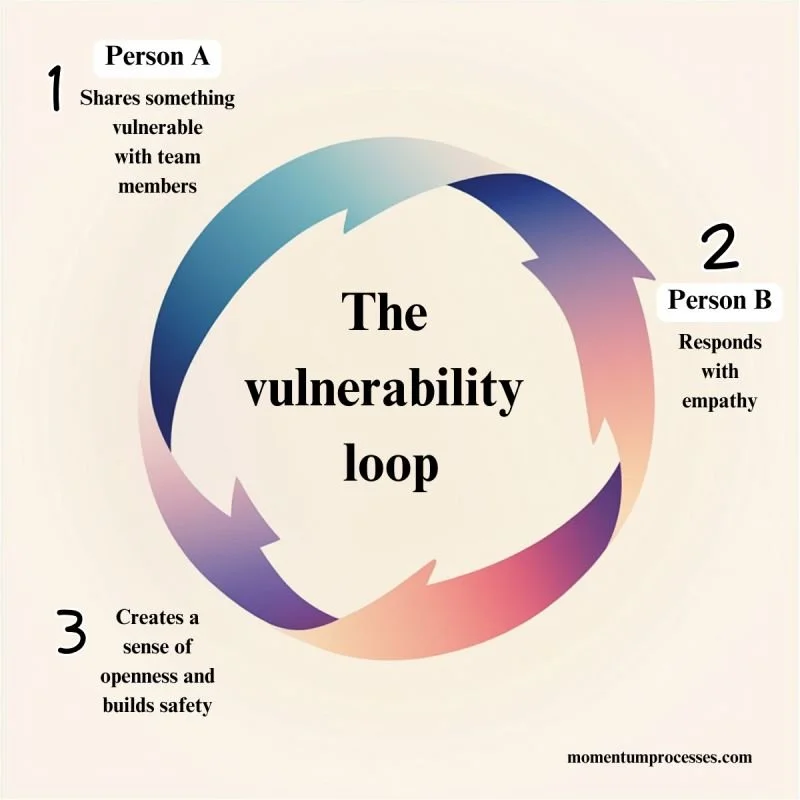
NYT bestselling author Daniel Coyle calls this the vulnerability loop—the foundation of deep relationships. Trust forms faster when people share experiences of uncertainty and openness.
This is why authority isn’t gained through looking perfect—it’s gained by going first — being open about your struggles first, so they feel comfortable trusting you with their problems.
It's one of the main reasons why I hired a mentor who is open about his trial-and-error. He gets the process so he can help streamline mine.
Personal Brand Storytelling Example
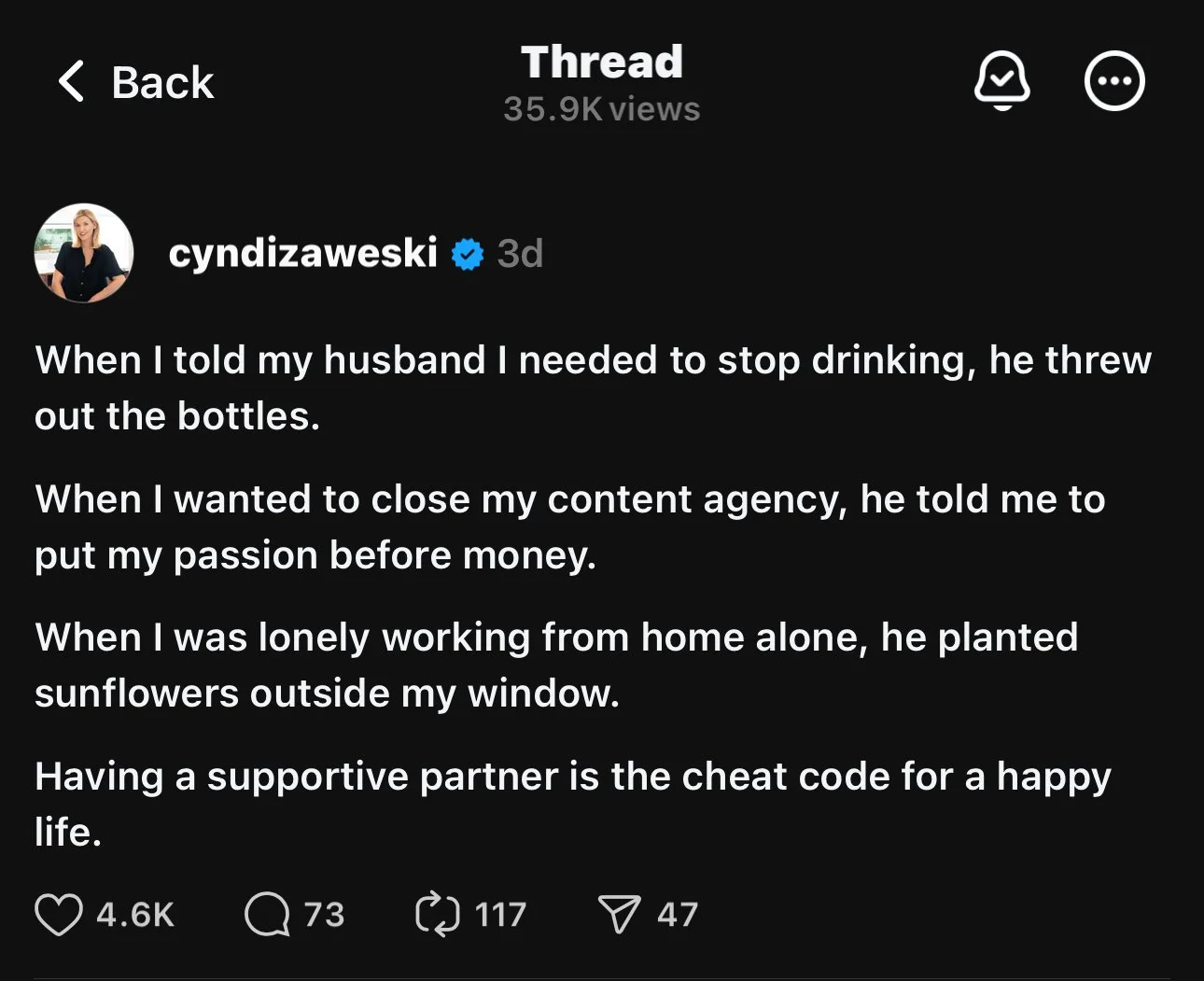
Talking about your flaws on the internet for all to see (including old bosses and colleagues) is HARD! I’ve always had a fear of how others perceive me because I was bullied a lot, so this is the storytelling skill the one I have to work on the most.
The practice is paying off. One of the most vulnerable stories I ever shared went viral on Threads last Friday—what a mixed bag of emotions LOL. All to say, I’m not downplaying the fact that it takes tremendous courage and humility.
But that is the same reason why it works.
StoryCraft Framework: Trust-Building Storytelling
The Trust Stack Storytelling Formula. The order matters. When you start with failure, people trust you before you ever make a point.
1️⃣ Lead with failure →People see themselves in your struggle, which makes them willing to trust you.
2️⃣ Then share the win → Now that they’re listening, they want to see what happens next. The win feels earned, not like a brag.
3️⃣ End with the lesson → Because they trusted the journey, they’re open to your advice—and they’re far more likely to act on it.
How To Apply It:
The next time you want to share a lesson associated with a win, ask: What challenge came before this? Lead with that.
When sharing advice, don’t just tell people what to do—show them the mistake that taught you the lesson.
If you’re scared to be vulnerable, remember: you don't need to overshare to resonate. The story you’re telling is not a recap of the bad things that happened. The “bad” stuff is only context for the real story: How you reacted, what you learned, and how you’re moving forward (imperfect action counts!)
If you want guidance on finding and writing these types of stories, swipe my frameworks and templates inside my Short-Form Storytelling Course.
Moral of the Story
Only sharing wins is the fastest way to erode reliability, making trust-building a time-consuming uphill battle instead of an organic feedback loop.
If you present a polished, struggle-free version of yourself, people don’t see you—they see someone out of touch with their reality.
They might admire your success, but they won’t believe you can help someone like them who isn’t perfect.
That’s why leading with failure is the fast-track to earn credibility.
It’s not about oversharing; it’s about showing the full picture so people can trust that your advice is worth listening to.
That’s all for this week.
Thanks for reading, until next time… remember someone out there feels seen because you had the courage to share your story.
Happy Storytelling,
Cyndi