
Leadership Storytelling Step One: Capture Your Aha Moments
Summary: According to Taoism, the wisest leaders encourage self-awareness in others. But they first practice it themselves. If you want leadership storytelling to be a part of your personal brand, this article shows you the first step in articulating your most meaningful insights: Catching your aha moments. Capturing these “five-second moments” of realization and transformation are a foundational part of a storytelling content creation process for leaders—because pinpointing “ahas” is how you transform your experiences into interesting perspectives that attract people to your style of thinking.
An “aha moment” is great. But an “Aha permanent new way of life” is much better.
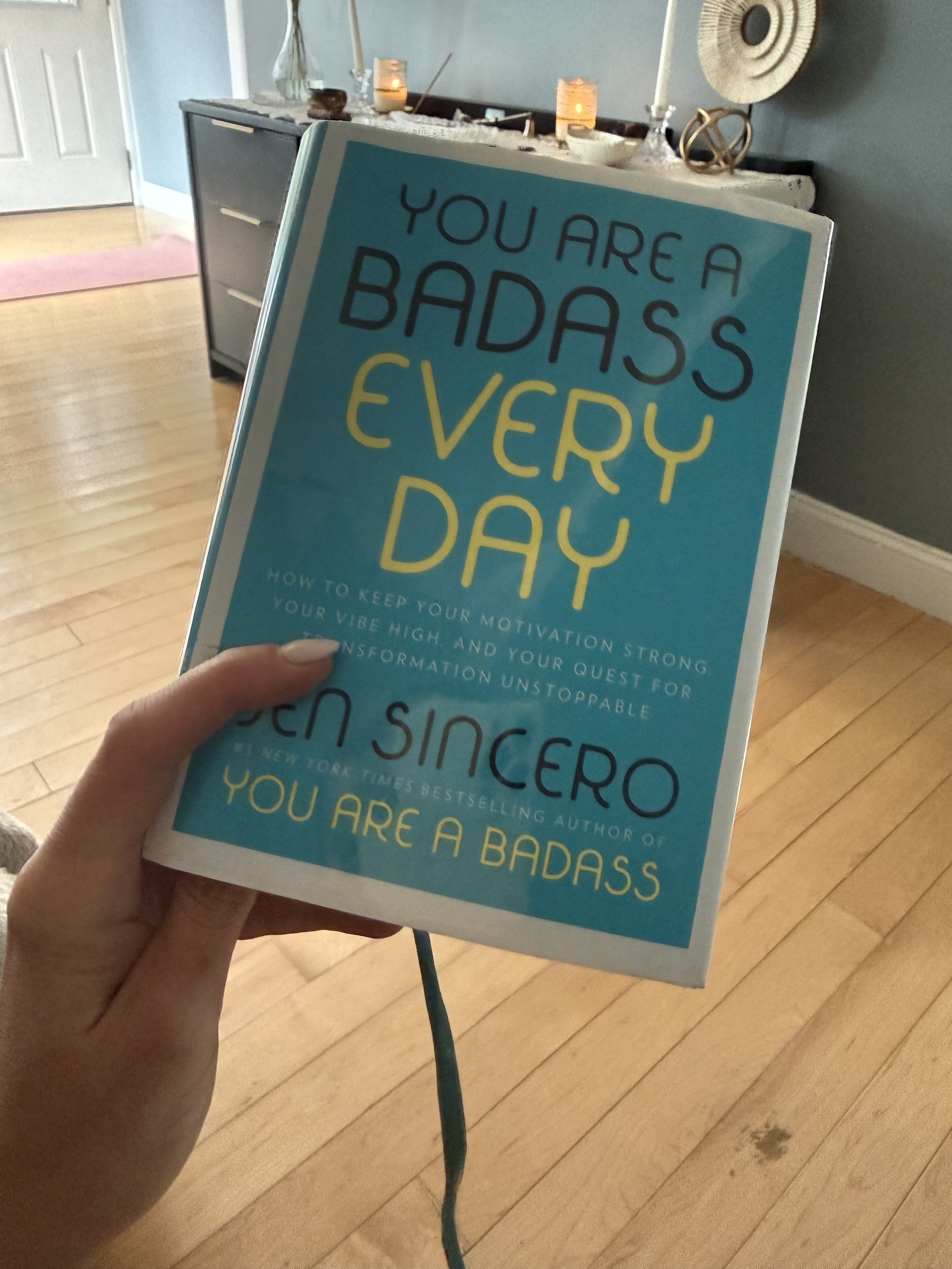
Every so often I pull an old book off the shelf, flip to a random page, and am confronted by whip-smart wisdom so fitting, I have no choice but to adopt it—and pass it along. This morning flip of the page is for the storytellers. Here is a five-minute practice to writer your aha moment—the first step in leadership storytelling.
How to Write Your Aha Moment
"Next time you have a mind-blowing flash of insight, write it down, then dig deeper to pinpoint the details of what shifted for you; record how the shift makes you feel and all the details of how you now think, believe, and approach life differently. ( This will take all of five minutes and could really, oh, you know, transform your entire reality—so don’t skip it!)
Read and viscerally absorb these details of your aha moment every day after it happens. I also recommend coming up with an aha mantra where you basically repeat your aha moment over and over so it becomes part of you.
If you really want the humdinger that just blew in and made all your hair stand up to stick around, you have to spend some time massaging it into your being or else it will fly out of you as quickly as it flew in."
— Jen Sincero, You Are A Badass, pg. 69
Turn Aha Moments Into Leadership Storytelling

Capturing these “five-second moments” of realization and transformation has long been a part of my storytelling content creation process—because pinpointing “ahas” is the first step to turning your experiences into interesting perspectives that attract people to your style of thinking.
Examining the events of our own life is like alchemy for transforming everyday experiences into the stories of our lives, allowing us to get to know ourselves—as well as our place in and perspective on the world—better.
Through the process we naturally uncover deeper, nuanced truths our audiences can’t get anywhere else.
And by sharing the stories and the lessons you’ve learned along the way, you inspire, educate, or guide to others facing similar challenges or situations.
This is how transformation leads to connection—leadership storytelling that isn’t preachy.
It’s a near endless source of original content.
A natural way to find content ideas that un-saturate your niche.
But as Jen reminds us:
One of the best parts of being a better storyteller is being able to spot and savor the moments that matter most.
The moments that help you do life better, according to your own whip-smart wisdom.
Here's To Your Ahas,Cyndi, Founder of StoryCraft
P.S. Turn your aha moments into storytelling content.
This article originally appeared in the StoryCraft newsletter, two-minute reads to make your message more meaningful. If you have ever wondered why people read your free stuff but never buy, questioned if social media is worth your time, or wondered how to tell a story so people understand the value of what you offer, we get into it with tactical advice.

Cyndi Zaweski, Owner of StoryCraft
Cyndi is a start her career as a journalist, spending a decade in newsrooms before trading her press pass to teach entrepreneurs how to spread their message through storytelling. Following traditional digital marketing tactics, she grew her Instagram to 65K—and promptly burnt out. Six months after she quit social media, sales jumped 176%. That’s when she realized that the mainstream narrative about what it takes to succeed online is just a made-up marketing script. Today, she helps business owners bypass the pressure-filled tactics to build a sustainable business that moves their mission forward with a memorable narrative.
Leadership Storytelling FAQs
-
Theoretical advice is easily commoditized. Walking an audience through the exact point where conventional wisdom failed you proves you have a unique point of view rather than repackaged textbook knowledge.
-
When everyone in your industry has access to the exact same market reports and tech stacks, data alone won't differentiate you. Documenting the specific moment the lightbulb went off reveals how you process complex problems. An "aha moment" grounds abstract market trends in real-world experimentation, transforming a generic observation into an authoritative, original point of view.
-
Every category-defining framework is simply a hard-won realization reverse-engineered into a repeatable roadmap. When you examine the turning point that solved a persistent problem, you can isolate the specific steps, criteria, and mindset shifts that caused the breakthrough. That becomes your methodology—proof that your results come from a systematic approach rather than accidental luck.
-
Treat it as your narrative hinge, not the opening headline. If you blurt out the realization in sentence one, you rob the audience of the context that made the lesson valuable. Open with the familiar industry friction or the flawed premise that everyone takes for granted. Build the tension until the standard approach breaks down, drop the realization right at the midpoint, and spend the remaining space showing how to operationalize that new clarity.
-
That is often more compelling than a solo epiphany because it positions you as a diagnostic leader rather than a lone genius. Frame the story around the moment they crossed the threshold: the exact phrase they used when the bottleneck cleared, what held them back, and what their breakthrough reveals about broader industry blind spots. It proves you know how to facilitate transformation for others, which is the core metric of leadership.
-
Resist the urge to force a polished, three-step framework just to hit a publishing schedule. Trusting yourself means allowing complex, uncomfortable experiences to sit in the incubation stage until real clarity surfaces naturally. Audiences instantly recognize the difference between lived wisdom that had time to settle and a rushed takeaway manufactured for engagement.
-
You cringe because you left the memory open without writing the ending. An unexamined failure sits in your subconscious as raw humiliation, giving your inner critic free rein to say, "You blew it." When you hunt down the "aha moment"—the exact point where a faulty assumption broke down and revealed a better path—you close the loop. You stop viewing yourself as someone who failed and start seeing a practitioner who discovered the boundaries of a problem. That mental shift transforms lingering shame into unshakeable self-trust.
-
People don’t lose faith in leaders who make mistakes; they lose faith in leaders who are defensive about them. When you try to hide a blunder or dress it up in corporate spin, people immediately smell the insecurity. When you dissect a misstep with calm, journalistic neutrality—explaining the flawed logic, the breakdown, and the new operating standard that came out of it—you project profound self-respect. Admitting a mistake without flinching proves you care more about truth and results than protecting your ego.
-
Because you cannot project a level of confidence to an audience that you haven't earned in private. The leaders who project authority aren't using charisma hacks—they have made peace with their own track record. When you catalog your turning points, you build private proof that you can survive chaos and extract value from failure. That internal certainty kills the urge to over-explain or prove yourself for approval. The audience relaxes because your relaxed.

P.S. Do you love using your brain too?
Download the full-size version of this image here.
Feel free to stick on all your brain-powered content.
No credit required.
Let's create demand for human craftsmanship :)
