3 Musts of Non-Salesy Storytelling: A Guide To Writing Storytelling Content That Sells Without the Ick Factor

I almost blew the defining job interview of my career because sales made my skin crawl.
It was 2017, and I was getting noticed for my writing style.
I had a knack for explaining complex topics in a way that got readers to comment on social media posts and buy our publications. It was a combination that made for happy readers and happy advertisers.
So when I was asked by a luxury lifestyle magazine to come into their downtown office to discuss an editorial position, I had a clue what to say.
Or so I thought.
The publisher was this queen of a woman.
Think Vogue's Anna Wintour meets Joanna Gaines.
Strong but warm. Effortlessly cool.
We really hit it off.
Until she asked:
“How do you find the balance between what you want to write, what our audience needs to hear, and what entices advertisers to buy space next to your articles?”
Ummmmm… ‘scuse me??
The advertisers?!
I was offended at the suggestion I’d consider them at all.
“I’m focused on telling interesting stories, and it’s not my job to please advertisers,” I said proudly.
She raised an eyebrow.
“When you work for a magazine like this one, it is your job to consider all stakeholders—not just the one you like most.”
Gulp.
Turns out writing and sharing content without considering sales is not how you operate a business.
And it’s a sobering truth that I—and so many other business owners I know—have had to bump up against.
We want to help.
We want to make money helping.
But we don’t want to ask the people we can help to pay us for our help.
The fear of sounding like Bob the used car salesman stops good-hearted people from promoting their work.
No doubt you’ve come across sales messages that make you cringe.
And no doubt you don’t want to sound anything like them.
Since I landed that editorial position nine years ago, I’ve become very aware of how we’re being sold to without hard pitches.
I’m always dissecting what works so I can replicate it.
Over the years, I’ve developed a framework based on these non-salesy sales messages. It’s a storytelling-supported messaging guide that’s helped my clients sell out their workshops and turn lurkers into buyers.
It also generated $35,000 in the first three days of launching my storytelling course last fall.
The framework has three things in common—elements you can use today to boost sales (without the ick-factor).
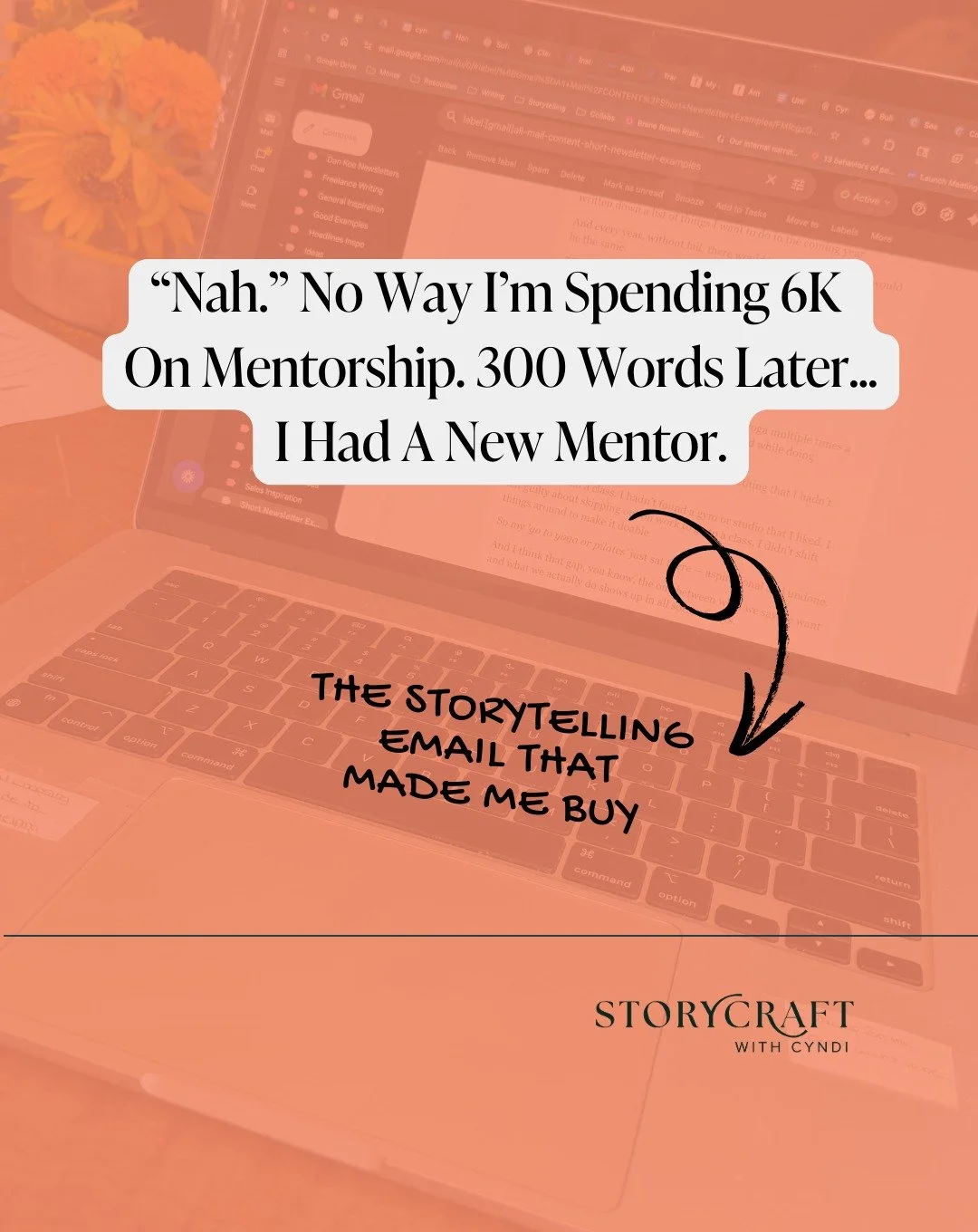
Here’s how they played out in a recent email that got me to drop $6K on coaching I didn’t realize I needed.
3 Musts of Non-Salesy Storytelling Content
1. What Isn’t Said
Non-salesy sales stories are an invitation more than a pitch. There was no language that made me feel bad or inadequate for having a problem. Pain points were addressed with empathy and a hyper-specific understanding of what I was up against. It felt like someone had been there before—and could name the things I hadn’t found words for yet. That kind of understanding made me trust their offer was the right fit for my situation—and it was.
2. My New Shiny Life
He told a story about what my life would be like in six weeks if I bought. My abilities. My confidence. How I’d be set up for long-term success. It wasn’t just about the outcome—it was about how I’d feel getting there.
3. The Price of Inaction
The stakes were clear. As he said, I could figure out what he was teaching on my own—but it would cost me time. And time was a price I wasn’t willing to keep paying.
What’s ironic about this email is that my first thought upon opening it was: “No way do I need this.”
But as I read those 300-ish words, layered with these non-salesy storytelling elements, I’d convinced myself to buy.
When we’re 100% confident a purchase will eliminate a problem that’s in the way of living the life we envision, we’ll buy—without needing to be persuaded.
But only from a person or brand who demonstrates real understanding.
Moral Of The Story:
Storytelling Isn’t Persuasion. It’s Motivation. People Aren’t Convinced. They’re Moved.
The process of sharing your offers can feel good.
It doesn’t have to feel like those cringe sales messages that turned you off in the past.
It can read like a conversation. A thoughtful way of showing people whether your solution will work for them—and helping them feel confident that you’d be a good fit.
Writing a sales story that feels as good to share as it does to read is an art. One it took me many, many years to grasp.
Which is why I boiled it down into this simple framework you can use to write and structure these kinds of non-salesy stories.
You’ll get instant access inside my Short-Form Storytelling course.
Students say: “I had my first story online within an hour, and I could immediately see the results.”
Non-salesy sales stories meet your audience with understanding, not pressure. And they build confidence—not just in you, but in your customer’s ability to solve their own problem with your expert guidance.
Tell those stories, and you’ll make sales without cringing at the copy.
Until next time,
Your Stories Are More Interesting Than You Think,
Cyndi