What Makes A Story A Good Story? The #1 Thing Business Owners Need To Reap The Benefits of Writing Storytelling Content
Do you have a favorite creator who inspires you to be your best?
Pulitzer Prize-winning rapper Kendrick Lamar is one of those people for me. Sometimes when his lyrics thump out my car speakers, I nod my head in awe:
“How does he do it?”
You might know Lamar for his Grammy-awarding songs like “Not Like Us.” Or perhaps his beef with Drake.
But as a storyteller, you’ll most appreciate his smart comparisons, suck-you-in narratives, and masterful expression of internal conflict.
These are skills worth honing whether you’re the voice of a generation or a content creator with a message that needs to be heard clearly.
That’s why I was thrilled when Lamar shared the answer to my “how does he do it?” question in a conversation with legendary producer and creative icon Rick Rubin.
Not surprisingly, Lamar (like so many other great storytellers) says his best ideas come when he’s out living his normal life:
Walking around his neighborhood
Visiting new places
Talking to people
What was surprising is what he notes about his everyday observations to turn moments into mega hits. Lamar said that when he writes something down, he always ties it to a single emotion.
That’s how he remembers the moments that are more than meets the eye. By doing that, weeks—even months—later Lamar can return to that exact moment and build an entire song around it.
This week's StoryCraft blog is about spotting the everyday, emotionally relevant moments in your life to build stories around.
First—Spot The Stories That Hide In Your Everyday Life
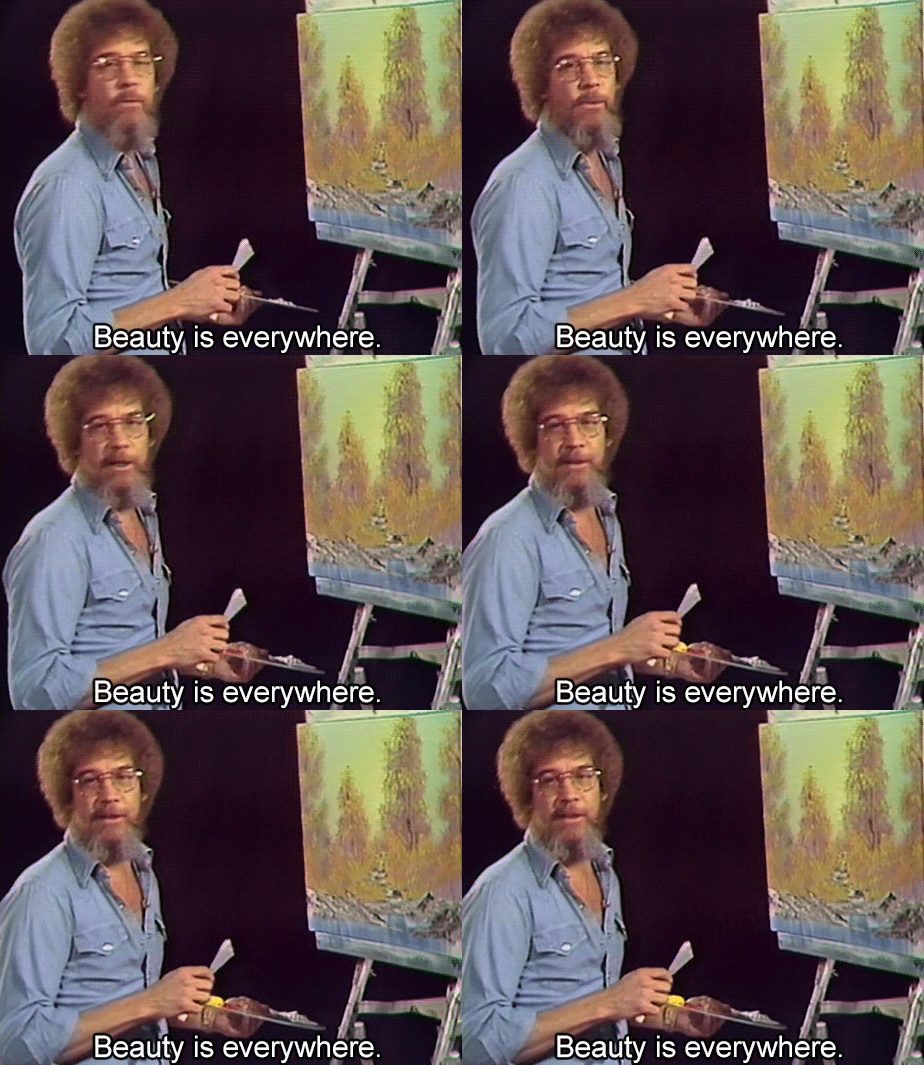
Bob Ross said: When you learn to paint, it’s not how to paint that’s difficult. It’s knowing what to paint.”
Storytelling is like that too.
Most people think they struggle with storytelling because they’re not good writers.
They obsess over hooks.
Or finding their voice.
But that’s a sneaky cover for the real issue: Not knowing what story to tell in the first place.
I’ve said this before, but it’s worth saying again:
The number one skill of great storytellers is not writing. It’s observation.
The most interesting moments of our day often get overlooked because they feel too ordinary.
But that’s exactly where good stories come from—small moments that reveal a bigger emotional truth.
That’s why I advise all my clients and students to start a story bank.
Getting in the habit of noticing the stories all around you skyrockets the odds of you telling stories.
What Moments Are Worth Recording?
The moment can come from anywhere:
A small win.
An internal debate.
A strange encounter.
A thought provoking comment.
But it’s only a good story if there’s an emotional shift.
As Lamar reminds us, it’s the emotion (not the moment itself) that matters when you’re retelling what happened.
Specific emotion makes it usable later.
It’s what brings the moment back to life, not just for you, but for your audience too.
Precise emotions are so important to storytelling I bake it into my system for capturing daily observations. The process makes it easier to recount the moments my audience relates to most.
After dinner, I take a few minutes to write down one moment from the day.
Just two sentences—one that describes what happened, and one that captures how I felt. It’s not a full story. It’s more like a breadcrumb.
A record of what caught my attention and how it felt, even if I don’t fully know the meaning yet. Over time, this became something I started sharing with my clients and students.
I turned it into a simple story capturing system called the Two-Sentence Story Bank. (Grab your free copy here).
It has a dedicated column just for emotion to make it easier to ID the moments now that could become storytelling content later.
Moral Of The Story:
Good Stories Hinge On An Emotional Shift
If you want to tell better stories, pay attention to how you feel—not just what happened.
Good stories hinge on an emotional shift.
These shifts happen every day in seemingly average moments.
Most people try to write stories from memory.
But without noting the emotional change, the moment gets harder to use. It flattens. You forget why it mattered.
That’s why Lamar ties his observations to a single emotion in his notes.
It’s why I built-in the emotion column into the Two-Sentence Story Bank.
Because when you track the internal shift, you build a habit of noticing the most important element of good storytelling.
You'll thank yourself for doing it when you sit down to write and process is so much easier.
That's all for this week.
Thanks for reading. Until next time…
Your Stories Are More Interesting Than You Think,
Cyndi