
31 Ways To Grow Your Online Business without posting Daily (Or Paying For Ads)
Is it possible to have a profitable online business without posting constantly? Short answer: Yes. Social media is just one option on the buffet table that is online marketing strategies. While there’s no shortage of tactics encouraging online business owners to post daily on Instagram, off the nine-grid, there are plenty of other proven ways to raise brand visibility, help customers find you, and make stable income online with no-or-low social media presence. Below I share 31 ways to grow your online business without posting daily or paying for ads.
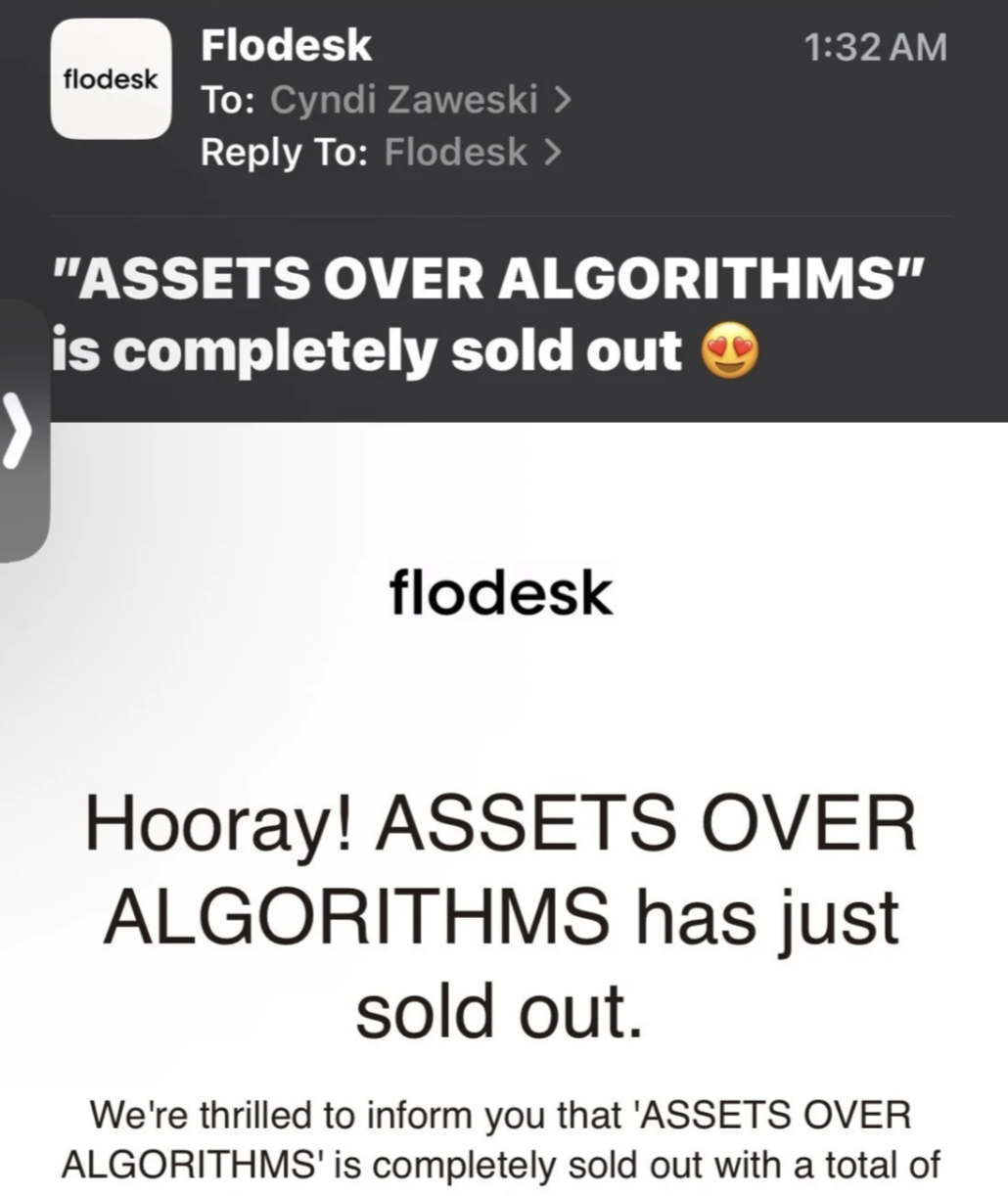
There are two extremes on social media today. On one hand, you have the group who still believes more is more when it comes to posting online. They have their AI agents 10x-ing their output to stay relevant on increasingly crowded feeds.
On the other hand, you have people like my customer my Arlene who confessed the onslaught of AI slop, the defeating fact that hardly any of her 12K followers sees her content, and constant reminders from IG to ‘boost’ her posts makes her want to quietly quit—not just Instagram but her entire business.
But you don’t have to throw in the towel if you hate social media marketing.
And you don’t have to choose between posting constantly or not posting at all either.
Whether you’re like me and you don’t want to post a single thing to social media to sell out your programs.
Or you just want to post less without your business imploding, below you’ll find 31 ways to market your business online without posting daily or paying for ads.
BTW—
This is not a checklist.
You don’t have to do everything on this list to succeed.
Personally, #1, #3, #19, #21, #24, and #31 are musts.
But choose the one(s) that feels most expansive for you.
The whole point is to find a digital marketing strategy that doesn’t burn you out or make you want to crawl under the covers in avoidance.
This article does contain affiliates links to software I use and love.
31 Ways To Grow Your Online Business without posting Daily (Or Paying For Ads)
Start a newsletter:
Not a Substack. Not a Beehive. Not a LinkedIn newsletter. Stake your digital presence in an asset you own free and clear. An algorithm-free space where you have a direct line to the people who want to hear from you most. A space where they don’t have to download an app or sift through “recommended reads” to sign up. Create a space that is yours and theirs. Honor it by sharing helpful, inspiring pieces—not out of obedience to a content calendar, but out of excitement and passion to have a conversation about a topic you both care about. The amount of emails you send per week, month, or year ain’t nothing but a number. (I sent 12 highly-irregular newsletters over the course of a year before launching to my list and selling out in 44 hours). Quality really beats quantity in the age of information overload. I use Flodesk for my newsletter and email sequence automations. I’ve been loyal to it’s easy interface since someone sent me a 25% discount to test out it four years ago. Here’s your 25% discount to Flodesk if you want to try it too.
Search engine optimization for your website:
Including your blog, sales pages, and newsletter sign up page. You may wonder: Does SEO really matter now that AI overviews top Google searches? SEO still matters because AI has to scrape it’s information from somewhere and that somewhere is most often the top ranking pages of Google search results. Being featured as a cited source inside an AI Overview acts as an endorsement. Users who click citations within AI summaries convert at better rates too.
Include keywords in your Instagram posts.
I haven’t posted on Instagram in nine months and the algorithm still sends me clients. How? Instagram SEO. When someone types in storytelling marketing, you can bet my posts pop up, bringing in new customers and newsletter subscribers while I live life offline. You don’t even have to post new content on Instagram to benefit. You can edit your old posts to include keywords. I’d love to see you in the next round of ASSETS OVER ALGORITHMS where you’ll get a custom list of IG keywords for your biz and learn how to weave them into your own search-optimized, story-driven Instagram carousel to grow online without posting daily.
Ask and answer questions in your blogs and social media posts
Today, search is conversational so structuring content around Q&As helps algorithms match your content with the people searching for it. This is called AEO or Answer Engine Optimization, which is especially relevant if you want your business to appear in AI Overviews, chat bot recommendations, voice assistants (Alexa, Siri), or Google Featured Snippets. The easiest way to do this is to turn your headlines and subheads into questions. Both on blogs and social media posts. Social media platforms are search engines too. For example, Instagram posts, as of July 2025, show up both in Google search results and AI chat bot recommendations. That means a few well-placed keywords and questions makes your Instagram content discoverable off the ‘Gram days, weeks, months, or, in my case, years after you hit publish. It’s one of the biggest ways I make stable a income online without posting daily.
A limited-series podcast.
Can’t/don’t want to commit to being a full-time podcaster? Do a limited series on a specific topic. Optimize the headlines and show notes for search and you have an evergreen asset that welcomes new people and a cool new resource for your current people.
A limited Instagram series.
Same concept. Different platform.
Repurpose your newsletters as blogs.
A few tweaks in wording will optimize them for SEO, AEO, and GEO (Generative Engine Optimization)—that’s another new term for AI optimization.
Include your newsletter sign up form in your individual blog posts.
Create a freebie or lead magnet.
A PDF with a step-by-step guide, a fill-in-the-blank framework, a quiz… sky’s the limit on what free resource you can create in exchange for an email address. On the whole, high-converting lead magnets are always: hyper specific, provide a quick win, and align with a paid offer.
Create a search-friendly blog(s) to promote your freebie.
Like I did for my micro storytelling guide, which ranks in the top three search results on Google and welcomes 10-20 new subscribers a month.
Share your blogs on Pinterest.
5-10 keyword-optimized Pins per blog. And your freebie too.
Collab with business owners in your niche.
Reach out to peers who inspire you but has a different approach or style. For example, my best friend, Heather Parady, also does storytelling marketing. We’re combining our unique approaches for a special project neither one of us wanted to tackle alone.
Collab with business owners outside your niche.
Think niche-adjacent people who have an audience with similar interests as yours. Like a yoga teacher teaming up with a breathwork facilitator.
Pitch yourself to a podcast.
My friend Michelle Glogovac literally wrote the book on How To Get On Podcasts. It’s much easier and less intimidating than you might think.
Sign up for Help A Reporter Out (HARO)
Respond to journalists’ request for expert comment to get your expertise featured in major publications. It’s free.
Offer to teach a guest workshop inside monthly membership communities.
The business owners who run these communities are ALWAYS looking to bring their audience fresh, helpful content—especially if they don’t have to create it.
Offer to teach a guest workshop locally.
At coffee shops, yoga studios, book stores, the community center, or library.
Drip post.
Spend five-minutes a day capturing an aha moment or story from your life that you can turn into a piece of wisdom for your readers. Pick your favorites at the end of the month. Take 15 minutes to type each up. Schedule them to go out over the weeks and months ahead— via email or social media. Storytelling is 22x more memorable than regular content so you don’t need to post as much to stay on their minds. Swipe my storytelling content creation process.
Set up social media automations.
“Comment X to get Y.” I love Creator Flow — a less costly version of ManyChat. Meta Suite has a free comment-to-DM automation option (I don’t use it because Meta’s built-in link delivery method looks spammy in DMs, IMO). Sustainable business tip: make the “comment” word on IG posts an Instagram keyword to increase post discoverability automatically.
Automate your welcome sequence.
When someone signs up to your newsletter or freebie, greet them with a series of 3-5 emails that provide context for who you, what you do, and how it helps them. This is called a welcome sequence—they convert up to 9x higher than regular email marketing. Which makes sense because people are most interested when the first sign up. There’s a tech illiterate-friendly feature in Flodesk to set up this automation.
Pick your narrative pillars.
Narrative pillars are like content pillars except they center around the transformations you facilitate, not just a topic you talk about. Instead of a content pillar like Instagram SEO. A narrative pillar is a change you create: Freeing business owners from the algorithm. Why this approach? Because transformation is the hallmark of storytelling, including brand storytelling. When you rotate through 3-5 narrative pillars, you’re building a cohesive big-picture brand narrative that sticks with people every time you hit publish—without the need to put extra thought into how or if each piece of individual content is serving your larger purpose. Here’s a step-by-step guide to choose your narrative pillars.
Host a co-working session or AMA.
Online entrepreneurship can be lonely—and distracting. Host a Zoom meet-up where people can get accountability and get down to business with the added support of having another nervous system in their presence. Make it an ask me anything (AMA) session if you’re trying to figure out what your audience wants from you.
Reach out to your IRL network.
Old professors, former colleagues/bosses, alumni associations, the cool person you met at a networking event at few years back. Slightly awkward hello aside, people are usually happy to hear from people they know, interested in what they’re up to, and happy to help where they can. I got my first clients by sending a few “this is what I am doing now” emails back in 2020.
Have a two-to-three sentence storytelling bio to make it easy for people to remember and refer you.
There are a few ways to do this. Here’s a simple one: “I was X, now I’m Y. It qualifies me in this unique way.” Mine for example is: “Following traditional digital marketing tactics, I grew my Instagram to 65K followers—and promptly burnt out. Six months after I quit social media, revenue increased 176%. Now, I help business owners bypass pressure-filled tactics to build a sustainable business that moves their mission forward with a memorable narrative.”
Write a guest article.
or personal essay.
Major outlets like Huffpost and Slate publish guest articles and personal essays. Not sure if your story is good or interesting enough? Let’s make sure it is. If you are a fiction writer, consider pitching literary journals. If you’re a poet, there are specific publications for you to submit to too.
Include a link to your newsletter in your email signature.
Launch an affiliate program for your products.
Most course hosting platforms have an add-on feature that makes this easy.
Have a rinse-and-repeat client referral process.
Give happy clients ready-to-forward email scripts or LinkedIn introduction templates so they can easily make introductions on your behalf. You could also offer a reward to both the referrer and the referee (e.g., $100 credit for the client and 10% off the first month for the new lead).
Use a pop-up on your website to collect the email addresses of interested visitors.
You can do this in Flodesk too.
Use carousel posts.
Carousels give two massive strategic advantages for people who want to post less:
Second Chance Slides: Instagram Carousels are the only format that gets a double-take. If someone scrolls right past your cover slide, Instagram’s algorithm will serve them your post a second time later in the day, but it will display your second slide instead. It automatically doubles your exposure with no extra effort.
Swipe Psychology: Video is passive. A viewer just sits back and consumes. But a carousel is “slow brain content.” It forces a reader to manually swipe. That tiny physical action flips them out of brainless scrolling and into active participation, engaging their attention, focus, and retention on a deeper level. When you structure those slides properly (which is exactly what I teach in ASSETS OVER ALGORITHMS), you don't have to aggressively pitch anyone. You're just laying down a clear, path where signing up for your newsletter or offer becomes the natural next step.
Carousels are also the format that got me 3,500 additional subscribers without a lead magnet and still brings in new subscribers—even though I haven’t posted in nine months!
This is not an exhaustive list of how to promote your business without social media and paid ads.
As you go, I’m certain you’ll come up with more uniquely suited for how you like to run and market your business.
The best place to start is to pick the one that feels most doable and exciting.
You can always try it and quit it if it’s not sustainable—because the best part of having a business is doing things in a way that supports you.
And finding that path can be the fun-est part of the process.
Which one(s) speaks to you?

Cyndi Zaweski, Owner of StoryCraft
Cyndi is a start her career as a journalist, spending a decade in newsrooms before trading her press pass to teach entrepreneurs how to spread their message through storytelling. Following traditional digital marketing tactics, she grew her Instagram to 65K—and promptly burnt out. Six months after she quit social media, sales jumped 176%. That’s when she realized that the mainstream narrative about what it takes to succeed online is just a made-up marketing script. Today, she helps business owners bypass the pressure-filled tactics to build a sustainable business that moves their mission forward with a memorable narrative.
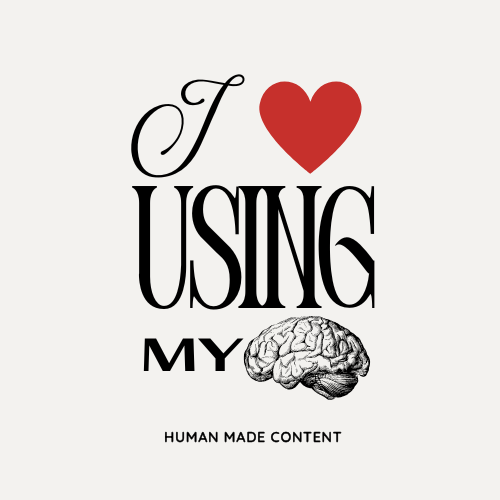
P.S. Do you love using your brain too?
Download the full-size version of this image here. Feel free to stick on all your brain-powered content. No credit required to celebrate human craftsmanship.
