
365 Buttons, Zero Explanation: How Intentional Marketing Creates Memorable Brand Messaging
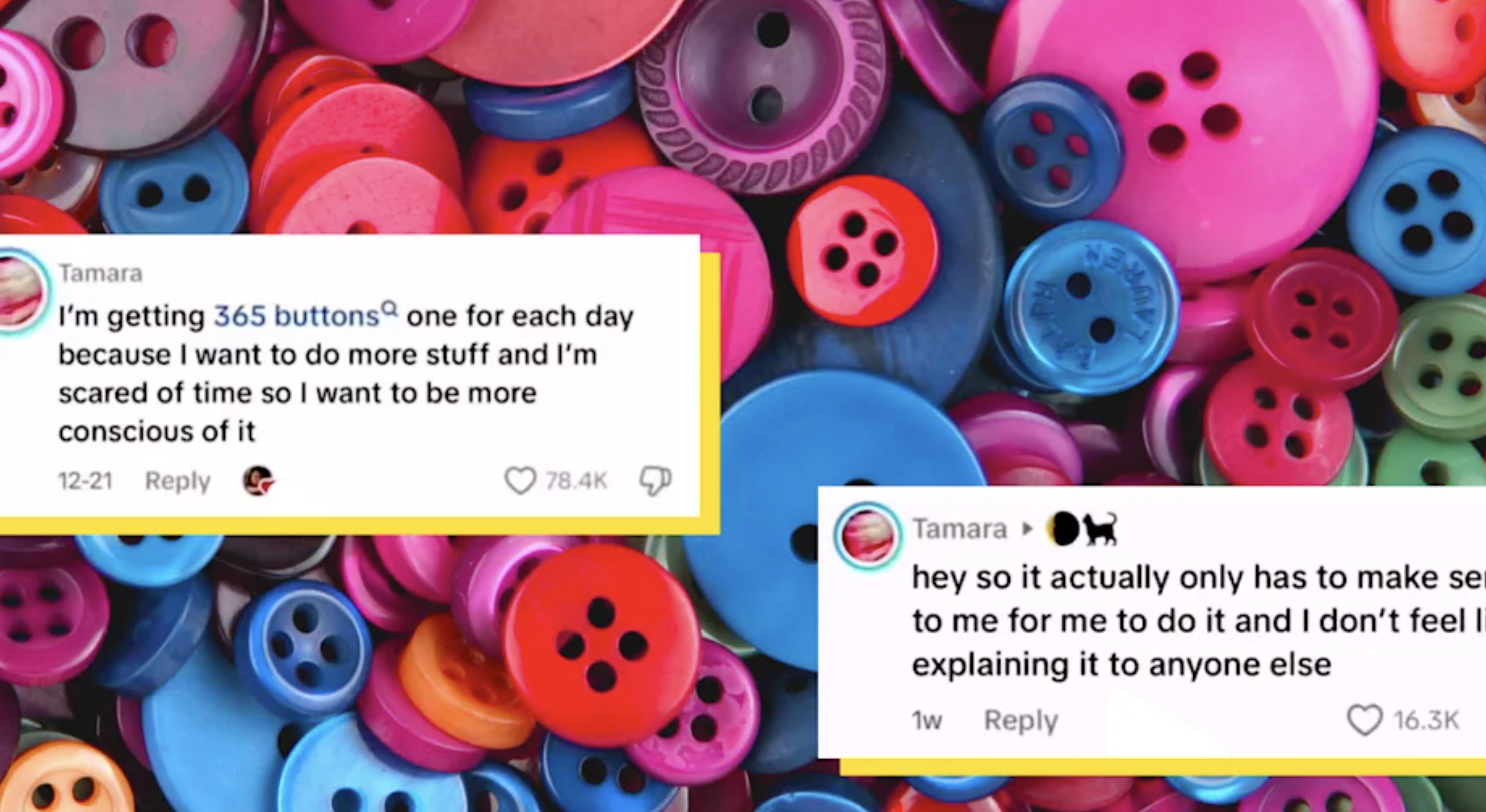
Photo Credit: Yahoo
There’s a TikTok user who goes by Tamara who is marking 2026 using 365 buttons.
How?
No one knows.
That’s the point.
The buzz about the buttons started with a comment. Someone asked what she meant. And Tamara replied:
“Hey, so it actually only has to make sense to me for me to do it and I don’t feel like explaining it to anyone else.”
OK then. 😂
That response didn’t end the conversation—it started one.
Tamara’s tart reply inspired what The New York Times calls “The first viral meme of 2026.”
Even The Philadelphia Eagles and Empire State Building are among the accounts piggybacking on the vibe:
I’m not explaining myself.
Whether intentional or not, the conversation reveals something deeper about how we’re talking to audiences in 2026.
The Missing Piece of Memorable brand Messaging
At first glance, it feels dismissive.
But it’s not about shutting people out.
It’s about not abandoning yourself in the process of being understood.
In true Year of The Horse energy, it’s apt 2026’s first viral moment speaks to empowerment and doing what matters to you without permission or external validation.
It’s a fiery reminder to put our mouth where our heart is.
In marketing terms, it’s a rejection of two things:
Over-explaining yourself with extra words
Watering your message down for wider acceptance
Because the truth is:
Memorable brand messaging isn’t watered down for mass approval. It boldly communicates what matters with clarity and conviction to a specific group of people.
That’s where most brand messaging starts to break down.
When clients come to me confused, feeling like their message is messy, or a general disconnect between what they want to say and what they are actually saying, this is often why.
Not because you don’t have a whip smart and meaningful message to share—it’s because you’re tweaking until the point until it no longer clear or rings true.
In practice, this can look like:
Toning it down
Burying it under extra words
Stretching it to fit more people.
Until the message loses its meaning, and you lose your connect with it.
Intentional marketing is the fix for this message warping tendency educators have because they want to help more people.
Intentional marketing is a purposeful, thoughtful approach to communication where every piece of content lines up with specific messaging that is important to the creator to voice. Rather than being reactive to trends or matching popular peers in your industry, it focuses on building trust and emotional connections with a targeted audience who is really hyped about your message, by prioritizing high-quality, relevant content over high-volume “posting because feel obligated to” content.
This approach is for entrepreneurs whose content is more than marketing. It’s a way to express themselves and bring about change they want to see in the world.
Is Your Brand Message Intentional?
I’ve never worked with a client or student who didn’t want their content to be empowering.
More than marketing, most business owners I know want their content to move people to action, leaving them feeling more capable and inspired than before.
Yet—articulating messages fortified in encouragement and passion has proven tricky.
Business owners with an impassioned message tend to flip-flop between two ends of a spectrum.
Anti-Tamara: Over-explaining, with rambling justifications of their viewpoint.
Full-Tamara: Shying away from sharing their reasoning, and message, at all.
Both stem from this fear, I, and likely you, are no stranger to.
The fear of “coming off a certain way.”
The fear of being misunderstood.
The fear of losing lukewarm followers and subscribers when you dare to share the fire behind your viewpoint.
To which I ask,

There is always a risk of repelling people when you do what matters.
But the truth is: The fire that casts off the wrong people is the light that draws in the right ones.
That’s what exceptional brand messaging does after all.
It makes you the obvious choice for the people you’re here to serve.
The Benefits of Having A Small Audience
Small loyal audiences are a business’ life blood in 2026.
That’s because two big online marketing industry shifts are happening at once:
1. Attention is fragmented
People are overwhelmed. They don’t follow broadly—they go deep with a few voices.
2. “Trend loyalty” is rising—and collapsing fast
So large audiences built on trends are unstable.
What lasts?
Trust
Relevance
Relationships
The three things small loyal audiences are built on.
Small audiences behave differently (and better). When audiences are smaller and tighter:
Engagement rates jump from ~1–2% (large audiences) to 5%+ in small ones, reports Entrepreneur Magazine
Conversion rates can be 2× higher than large audiences
Put Words To Thoughts With Intentional Brand Messaging
What would it take for you to unapologetically say it the way only you can?
Nearly 100% of people in a recent (small) study said they seek emotional support (read: validation) before they act—even if they know it’s the right move for them.
So many of us are waiting for permission slips that’ll never come.
But if the first meme of the year teaches us anything it’s:
We can do, say, and act in the ways that matter to us.
No explanation needed.

When you find yourself self-editing what matters, you might borrow this mantra that helps me. I Create From Intention, Not Out Of Expectation.
Showing up that way is the most empowering content we can create.
Because when we show up fully, it quietly encourages others to do the same.
Storytelling To Share Your Brand Messages Intentionally
Practically speaking… Below you’ll find two ways to communicate your brand messages through storytelling:
This content originally appeared in the StoryCraft Newsletter, where my goal is to help you tell stories that make your message memorable, impactful and profitable. Sign up here.
Thanks for Reading!

Cyndi Zaweski, Owner of StoryCraft
Cyndi Zaweski is an independent journalist and the owner of StoryCraft. She writes primarily about how narrative influences behavior, exploring how storytelling, belief, and perspective drive action through the lenses of marketing, philosophy, psychology, technology, spirituality, and beyond. Her brand story clients have been featured on CBC, iHeartRadio, The Minimalist Podcast, and more.
